
Application Background
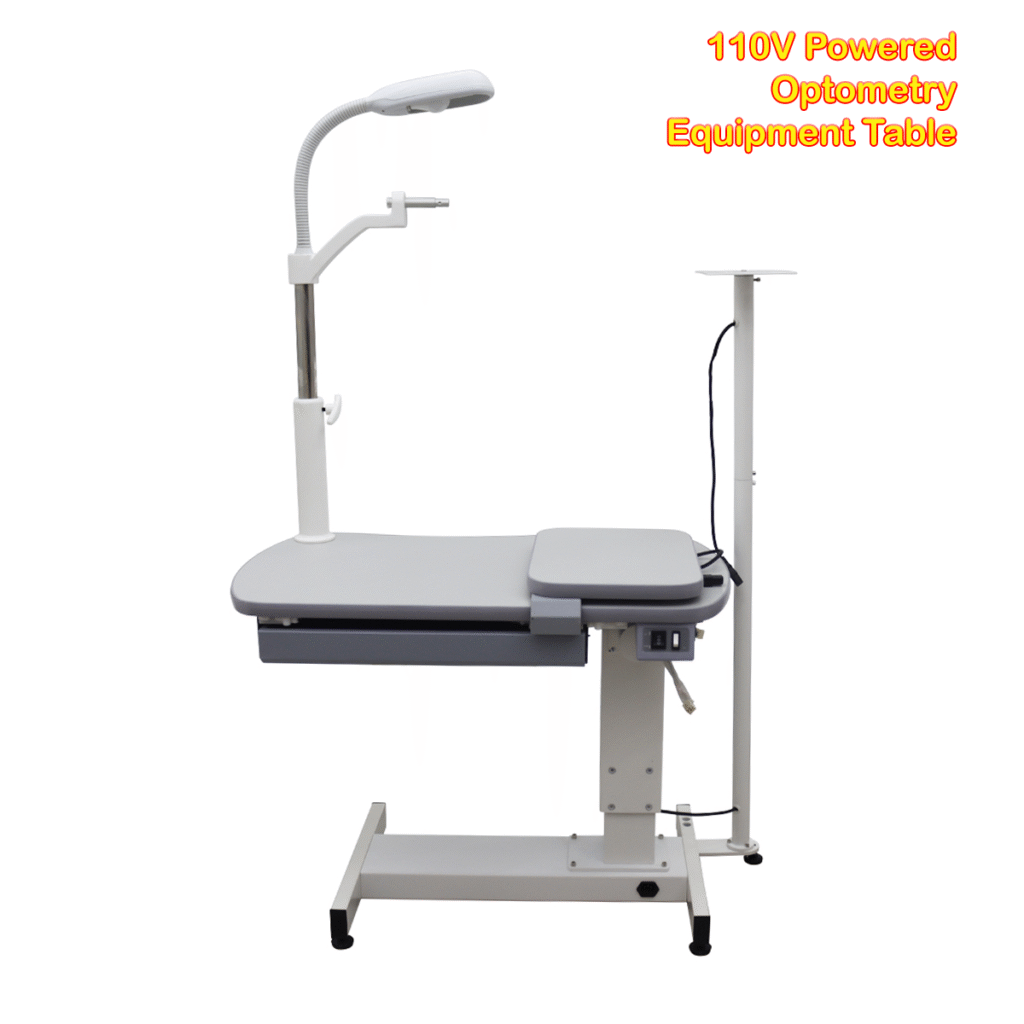
Ophthalmic examination tables are widely used in eye clinics and medical centers to support diagnostic equipment and instruments during patient examinations.
To ensure accurate operation and patient comfort, these tables must provide precise, stable, and smooth height adjustment, allowing doctors to work efficiently while accommodating patients of different heights and seating positions.
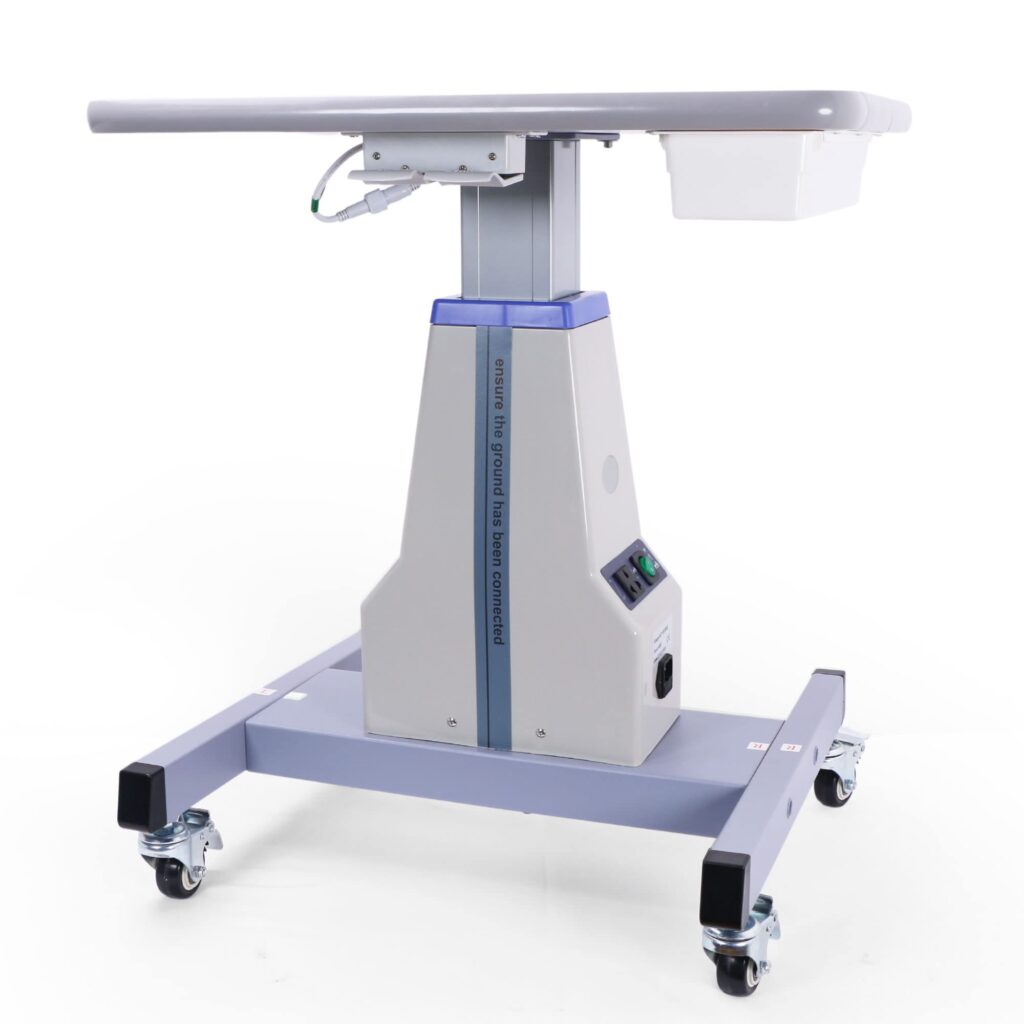
Electric lifting columns offer a reliable solution for vertical adjustment in ophthalmic diagnostic tables, where safety and precision are critical.
Key Technical Parameters
For this ophthalmic examination table application, the lifting column is selected with the following configuration:
- Installation height: 530 mm
- Stroke: 200 mm
- Total extended length: 730 mm
- Rated load: 40 kg
- Lifting speed: 20 mm/s
This configuration allows the table to cover the required working height range while maintaining compact structure and smooth motion.
Engineering Considerations
Several engineering factors are particularly important in ophthalmic applications:
- High stability at all positions
The lifting column must remain rigid to avoid vibration that could affect examination accuracy - Smooth and controlled speed
A lifting speed of 20 mm/s provides comfortable adjustment without sudden movement - Compact installation height
A base height of 530 mm allows integration into standard medical table designs - Reliable load handling
A 40 kg rated load comfortably supports tabletop structures and mounted diagnostic devices - Quiet operation
Low noise is essential in medical environments to maintain a calm clinical atmosphere
Advantages of Electric Height Adjustment in Ophthalmic Tables
Compared to fixed-height or manually adjustable tables, electric lifting columns provide:
- Improved ergonomics for medical professionals
- Better patient comfort during examinations
- Precise repeatability for consistent working positions
- Reduced physical effort for staff
- Enhanced overall clinical workflow
These benefits are particularly valuable in ophthalmology, where precision and comfort directly affect examination quality.