
Note: This application guide is based on public medical equipment context and general engineering requirements. It does not disclose any confidential project details.
Intro
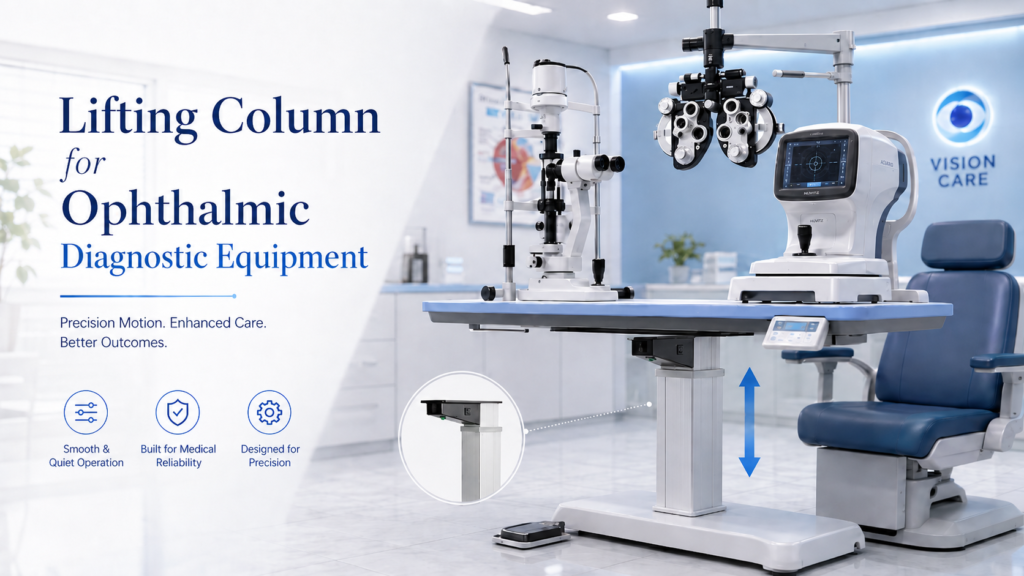
Ophthalmic diagnostic equipment needs quiet, compact and repeatable motion. Electric linear actuators and lifting columns can adjust exam table height, chin-rest position, diagnostic module angle, protective covers and service panels without bulky pneumatic systems.
Why This Application Fits Electric Lifting Columns
For medical equipment and ophthalmology products such as slit lamps, ophthalmoscopes and autorefractors. That type of equipment often needs controlled patient alignment, small optical module movement, and safe service access.
Compared with manual knobs or pneumatic cylinders, electric actuators are easier to integrate into a clean clinical device: they can run from low-voltage DC power, use limit switches or feedback, and move slowly enough for patient-facing equipment.
Common Use Cases
| Device Area | Typical Motion | Actuator Benefit |
|---|---|---|
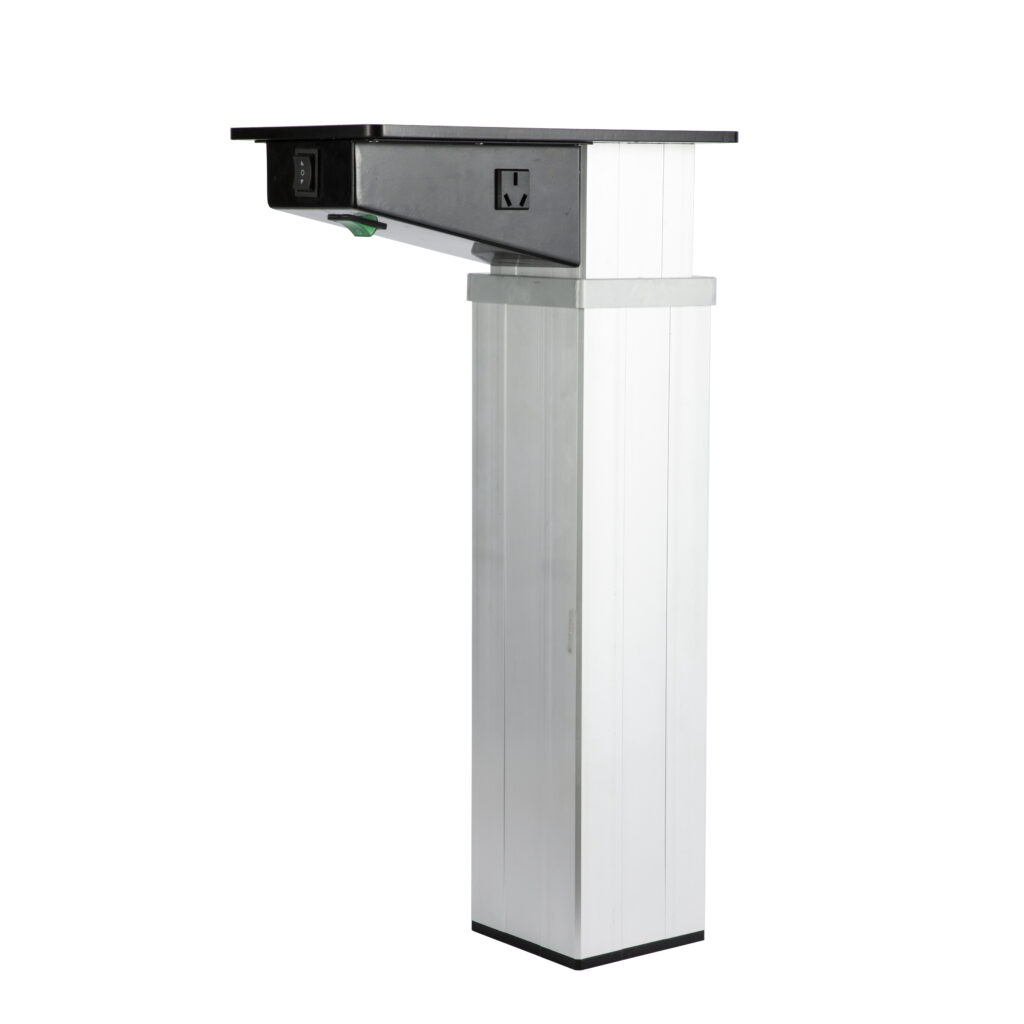
| Patient exam table | Raise or lower the patient platform | Helps align different patients with the optical axis. |
| Chin rest / head support | Small vertical adjustment | Improves repeatable positioning with fine, smooth movement. |
| Diagnostic module | Tilt, lift or focus adjustment | Supports compact optical or sensor positioning. |
| Protective cover | Open a shield or service hood | Provides cleaner access for maintenance and cleaning. |
| Mobile medical cart | Height or panel adjustment | Improves ergonomics for clinicians and service staff. |
Product Video
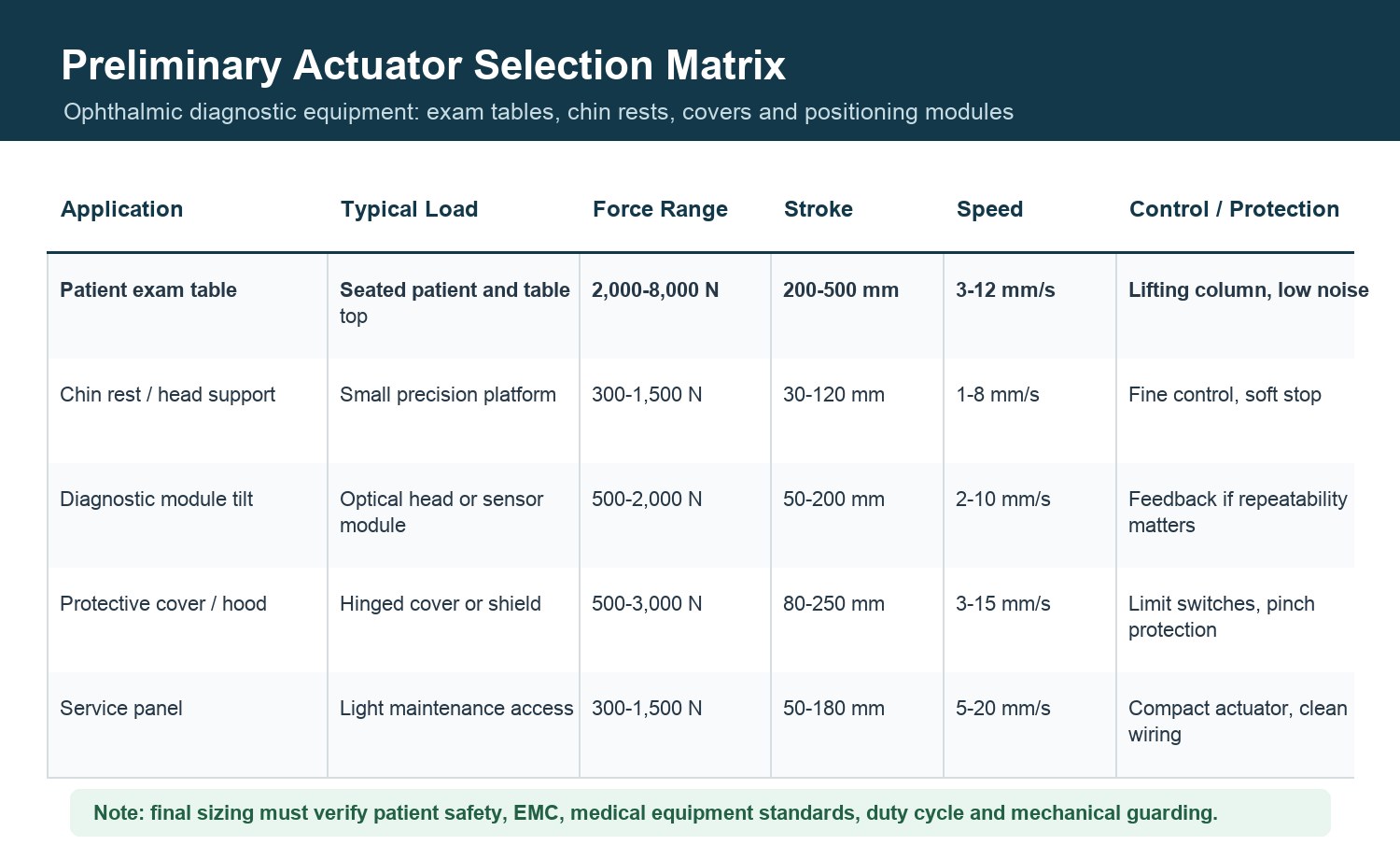
Selection Matrix
Engineering Notes
- Use guided lifting for patient loads. A lifting column is usually better than an exposed actuator when vertical stability is required.
- Keep side load away from the actuator. Poor bracket geometry can create noise, wear and inaccurate positioning.
- Design for cleaning and service. Cable routing, cover access and smooth surfaces matter in clinical environments.
- Plan medical compliance separately. Final equipment must verify applicable safety, EMC, leakage current and risk-management requirements.
Information Needed for Accurate Sizing
- Moving load weight and center of gravity
- Required height range, stroke or tilt angle
- Available mounting space and bracket geometry
- Target noise level and movement speed
- Controller type, feedback needs and end-position logic
- Relevant medical device safety and EMC requirements
FAQ
Can a linear actuator be used in ophthalmic diagnostic equipment?
Yes. It is suitable for small covers, module positioning, chin rests and light adjustment tasks when force, noise and safety are correctly specified.
When should a lifting column be used instead?
Use a lifting column for vertical movement that must carry patient weight or resist off-center load. The integrated guidance improves stability.
Is feedback required?
Feedback is recommended when the equipment stores user positions, requires repeatable alignment, or needs controller confirmation of position.
What is the main design priority?
Patient-facing motion must be quiet, slow, stable and guarded. Maximum speed is usually less important than comfort and predictable movement.