
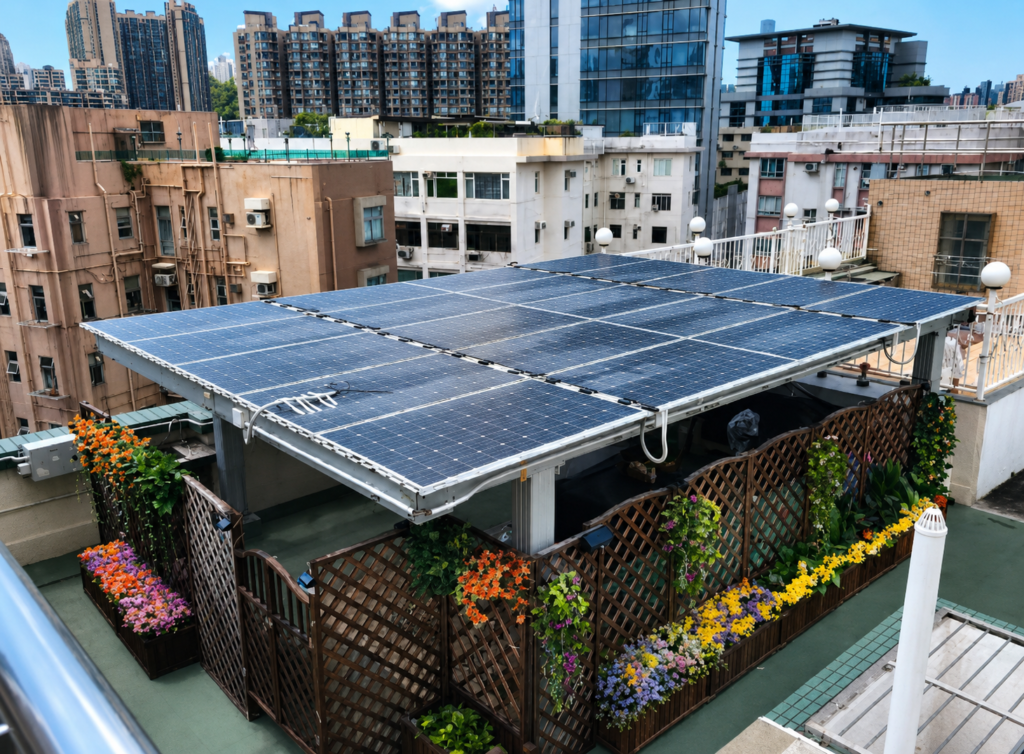
Photovoltaic lifting columns combine solar power generation with an electric lifting mechanism for outdoor traffic access control, security management, and remote site operation. Lifting column equipped with photovoltaic panels can capture solar energy, reduce dependence on conventional grid power, support traffic management, improve security, and create the foundation for smart remote management.
For engineering use, however, a photovoltaic lifting column should not be treated as “a normal bollard with a solar panel attached.” It is a complete power and motion system. The solar panel, battery, controller, actuator, safety logic, communication module, and mechanical column all need to be sized together.
What the Solar Application Tells Us
This article focuses on four application values: renewable energy supply, traffic management, security protection, and intelligent management. These are valid directions for photovoltaic lifting columns, especially in sites where cabling is difficult or where a backup power source improves system reliability.
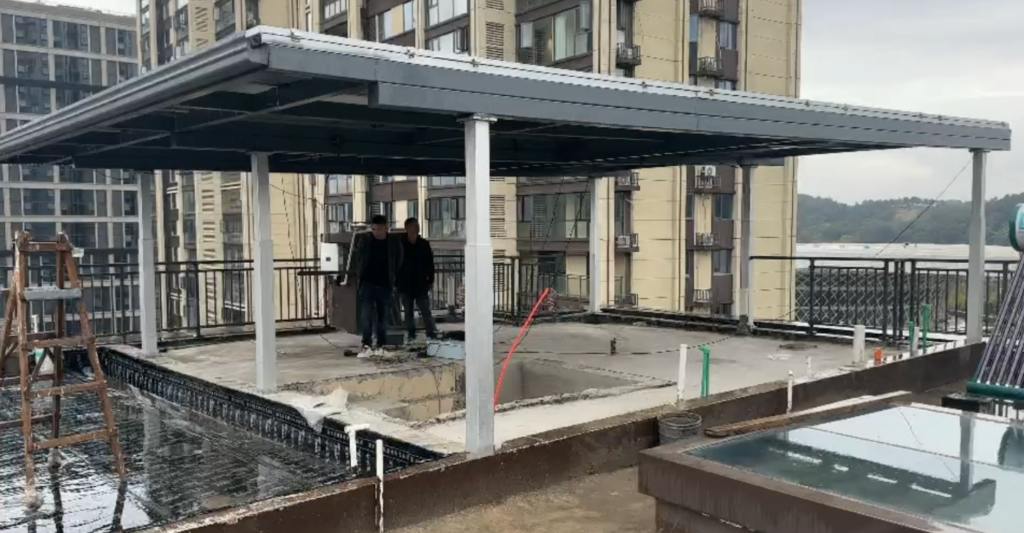
The most relevant use cases include solar park entrances, industrial campus gates, temporary traffic control points, public facility protection, and remote road access control. In these places, solar power can reduce trenching and wiring work, while the lifting column provides controlled vehicle access.
System Architecture: PV Power + Battery + Electric Lifting Column
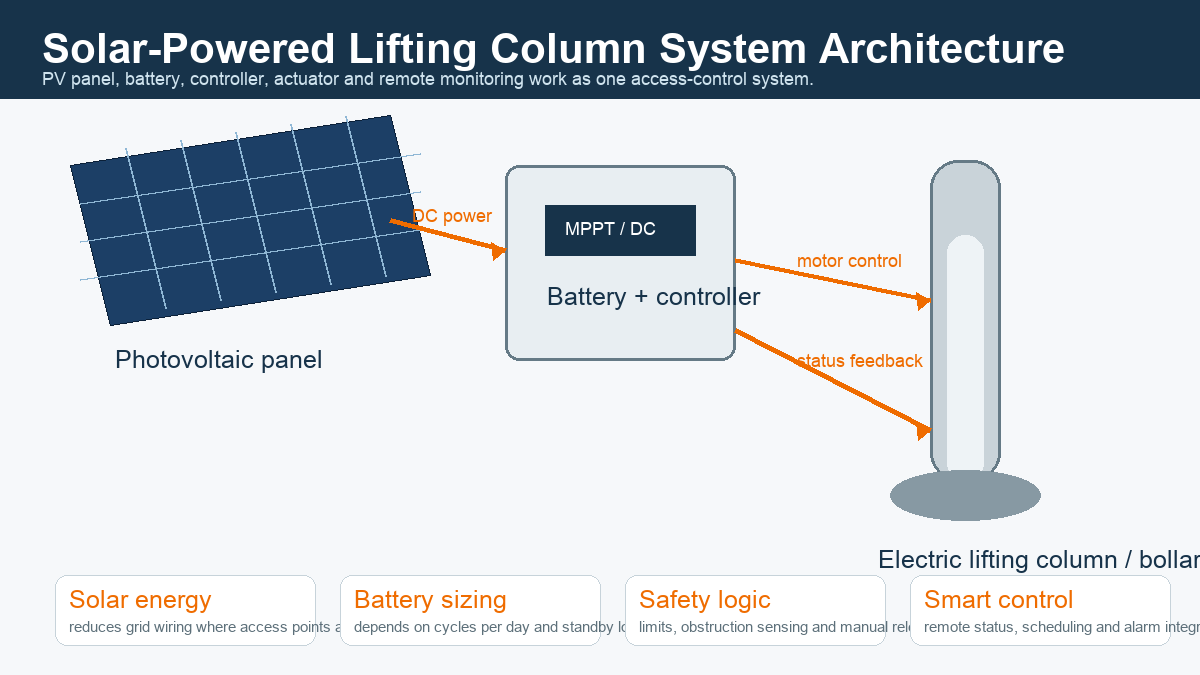
A practical photovoltaic lifting column system usually includes a PV panel, charge controller, battery pack, DC control unit, motorized lifting actuator or drive mechanism, limit switches, obstruction protection, manual release, and remote communication. The column should be designed for outdoor installation, repeated up/down cycles, rain, dust, temperature variation, and vehicle environment vibration.
Application Scenarios in the Photovoltaic Industry
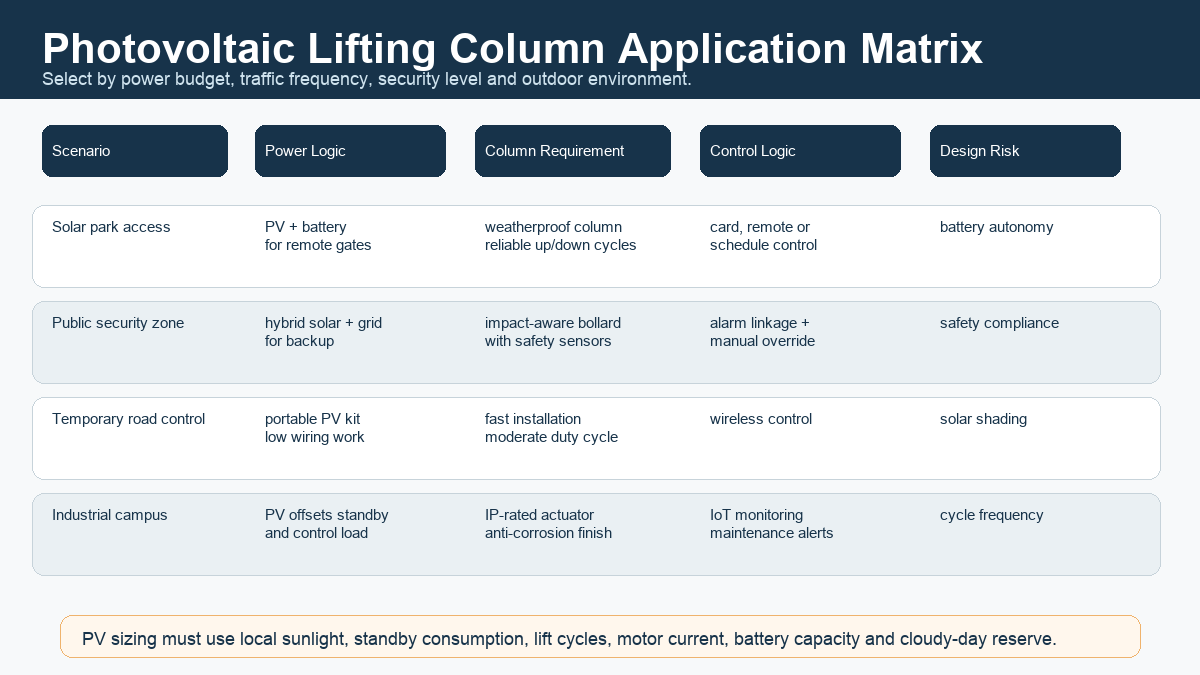
1. Solar Farm Entrance Control
Large photovoltaic power stations often have remote access points. Installing grid power at every gate can be expensive, especially across long roads or distributed land. A solar-powered lifting column can manage authorized vehicle entry while using local PV power and battery storage.
2. Industrial Park and Campus Traffic Management
In industrial parks with rooftop solar, carport PV, or distributed solar stations, photovoltaic lifting columns can support low-carbon access management. They can restrict vehicle entry during certain time periods and lower automatically for authorized vehicles, maintenance teams, or emergency access.
3. Public Facility and Security Protection
For public plazas, substations, logistics entrances, and sensitive facilities, lifting columns can form a physical barrier. Solar power can help maintain operation when grid wiring is difficult or when backup operation is required.
4. Temporary or Mobile Traffic Control
Temporary construction zones, event venues, and outdoor security points may not justify permanent cable installation. A PV-powered lifting column package can reduce civil work and make the system easier to deploy or relocate.
Engineering Requirements Before Product Selection
Selection should begin with the duty cycle and power budget, not only column height. For a reliable system, engineers should confirm:
- Daily lifting cycles: number of up/down operations per day and peak-hour frequency.
- Motor energy per cycle: based on column weight, stroke, lifting speed, drive efficiency, and load.
- Standby consumption: controller, sensors, wireless communication, and monitoring modules can consume more energy than occasional lifting.
- PV panel capacity: must be based on local sunlight, panel angle, shading, dust, and seasonal variation.
- Battery capacity: should include cloudy-day reserve, temperature derating, and aging margin.
- Safety behavior: obstruction detection, emergency release, manual lowering, and fail-safe position.
- Outdoor protection: corrosion resistance, water drainage, dust protection, cable sealing, and lightning protection.
- Control interface: card reader, remote control, license plate recognition, IoT gateway, or central management platform.
Why Photovoltaic Power Is Useful, But Not Always Enough
Solar power is valuable for remote access points and low-frequency traffic control. But it should be sized honestly. A lifting column used only a few dozen times per day may be suitable for a compact PV and battery package. A high-security checkpoint with frequent operation, cameras, radar, lights, heaters, and communication equipment may need hybrid power or a much larger energy system.
This is why GeMinG recommends treating photovoltaic power as part of the complete access-control design. The power system should be calculated before the column drive is finalized.
How GeMinG Can Support Custom Photovoltaic Lifting Columns
GeMinG can support projects that require electric lifting columns, DC actuator systems, control boxes, limit feedback, and custom integration for outdoor industrial applications. For photovoltaic lifting column projects, useful customization points include column stroke, motor voltage, drive speed, surface material, control box interface, battery cabinet layout, manual emergency release, and communication protocol.
Related GeMinG application references include electric lifting column, linear actuator, industrial application, and electric lifting column selection guidance.
Conclusion
Photovoltaic lifting columns can provide a practical combination of renewable energy, traffic control, physical security, and smart management. Their real value appears when the solar power package and lifting mechanism are engineered together. Before selecting a model, confirm daily cycles, standby power, PV panel size, battery reserve, safety logic, environmental conditions, and communication needs. With those inputs, GeMinG can help develop a lifting column solution suitable for photovoltaic parks, industrial campuses, remote access points, and outdoor security control.
FAQ
Can a lifting column run only on solar power?
Yes, in low to medium duty applications, but only if the PV panel and battery are sized from real daily cycles, standby load, local sunlight, and cloudy-day reserve.
What consumes more energy: lifting or standby control?
In many low-frequency access-control systems, standby electronics, communication modules, and sensors can consume more daily energy than the lifting motion itself.
Is a photovoltaic lifting column suitable for high-security checkpoints?
It can be used, but high-frequency or high-security sites often require a larger PV/battery system or hybrid grid backup to guarantee operation.