
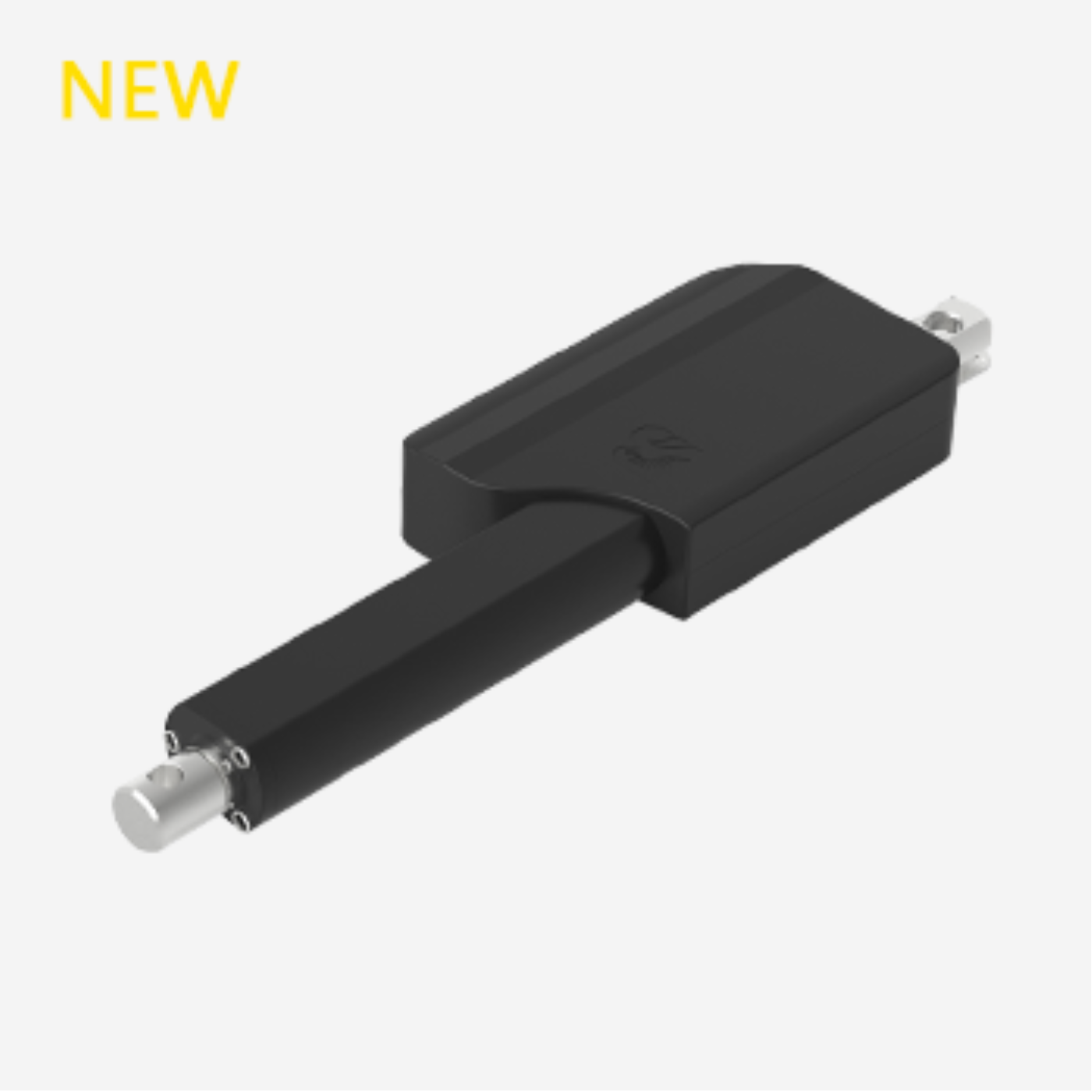
A custom linear actuator manufacturer should do more than quote force and stroke from a catalog. A useful OEM supplier reviews the complete motion requirement. This includes the load direction, speed, duty cycle, available space, mounts, controls, environment, test method, and production records. This guide shows how to evaluate that capability without relying on vague claims or a generic “top manufacturer” list.
Quick evaluation checklist
A strong supplier should be able to show clear evidence in seven areas:
- application questions that cover the full mechanism;
- documented force, speed, current, and duty-cycle limits;
- controlled drawings and revision records;
- options that match the required mounts, size, and controls;
- a test plan based on the main failure risks;
- repeatable inspection and traceability during production;
- support for changes, failures, and future product revisions.
Start with the application, not the actuator model
The first sign of a capable supplier is the quality of its application questions. An actuator that can move a load on a bench may still fail in equipment because of side load, misalignment, an unsupported cover, voltage drop, repeated starts, or an unrealistic duty cycle. A useful engineering review therefore begins with the mechanism and its operating sequence.
Before recommending a model, the manufacturer should clarify:
- the working load, peak load, and direction of force;
- the required stroke, speed, and complete movement time;
- the available retracted length and installation envelope;
- the number of cycles per hour and rest time between movements;
- the mounting points, guidance method, and possible side load;
- the available voltage, control signals, and position-feedback needs;
- temperature, moisture, dust, cleaning, vibration, and corrosion exposure;
- the consequence of a stall, power loss, or unexpected movement.
If a supplier immediately recommends a product without asking for these inputs, the quotation may be fast, but the application risk remains with the buyer.
Manufacturer, integrator, or catalog distributor?
These supplier types can all be useful, but they solve different problems. A catalog distributor is efficient when a standard actuator meets the requirement. An integrator can combine the actuator with controls, wiring, and mechanical parts. A manufacturer adds the most value when the project needs a special size, mount, feedback device, connector, protection level, or validation plan. It should also support repeatable OEM production.
Buyers should ask who owns each engineering decision. The supplier should know who reviews the screw, motor, gears, housing, seals, cable, feedback device, and test method. If it cannot explain this, it may be reselling a product rather than controlling the design. Reselling is not always a problem. However, the responsibility and technical limits should be clear before qualification.
Ten capabilities to evaluate
1. Application engineering review
The supplier should translate equipment requirements into actuator requirements and identify missing information. Good review notes distinguish working load from peak load, axial force from side load, nominal voltage from loaded voltage, and occasional operation from repetitive duty.
2. Transparent operating limits
Ask how force, speed, current, duty cycle, temperature, and service life affect one another. A single maximum-force value is not enough. The supplier should explain which ratings can be used continuously, which apply only to short movements, and what safety margin is expected in the actual mechanism.
3. Mechanical customization
Useful options may include stroke, retracted length, front and rear mounts, cable exit, connector, housing shape, anti-rotation features, or installation interfaces. The important question is not whether “customization” is available, but which dimensions can change without invalidating performance or requiring a new validation program.
4. Electrical and control compatibility
Confirm the voltage and both running and peak current. Also confirm limit-switch behavior, braking, synchronization, and feedback options. The OEM may need simple two-wire reversal, Hall pulses, a potentiometer, an encoder, or a communication interface. The supplier should state what is standard, optional, or specific to the project.
5. Drawing and digital-model control
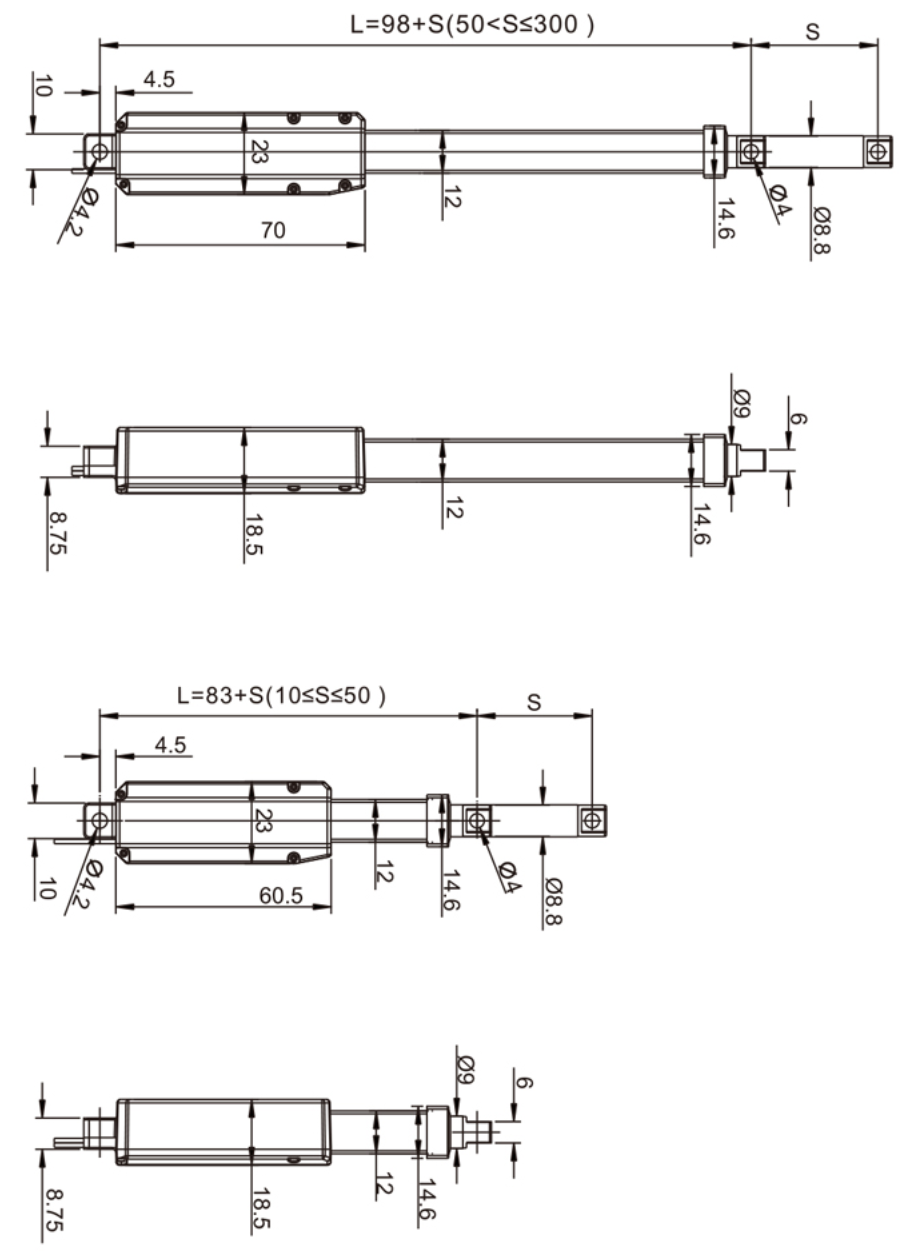
A controlled drawing is the basis of an OEM purchase specification. It should identify critical dimensions, tolerances, connector details, mounting interfaces, and revision status. STEP files can help with fit checks, but the released drawing should remain the contractual reference for manufacturing and inspection.
6. Validation evidence
Ask what is tested and under which conditions. Evidence may include load cycling, current, speed, temperature rise, ingress protection, noise, backlash, holding force, cable flexing, salt spray, or vibration. Not every project needs every test. The test plan should focus on the actual failure risks.
7. Sample and pilot-batch control
A prototype proves that the concept can move. It does not prove that the design is ready for production. The OEM should define what will be measured during the sample, how changes will be recorded, and which version becomes the approved production baseline.
8. Production quality and traceability
Ask how incoming parts, assembly steps, end-of-line tests, nonconforming products, and lot records are controlled. For customized products, revision traceability matters because a small unapproved change to the motor, grease, cable, gear, or feedback component can affect system behavior.
9. Change management
The supplier should have a method for notifying the OEM before material, component, process, firmware, or drawing changes. This is especially important when the actuator is built into regulated, safety-related, or long-life equipment.
10. Lifecycle and failure-analysis support
Qualification continues after production begins. Clarify spare-part strategy, warranty evidence, returned-product analysis, corrective-action reporting, and the expected support for future revisions. A useful failure report separates actuator defects from mounting, load, power, control, and environmental causes.
Documents to request before supplier approval
A practical approval package normally includes enough information for engineering, quality, purchasing, and production to review the same product definition:
- released product drawing and revision number;
- electrical connection and control instructions;
- rated operating conditions and documented exclusions;
- sample or validation test report;
- inspection criteria and key measured characteristics;
- material or compliance declarations required by the destination market;
- packaging, labeling, and lot-identification method;
- change-notification and nonconformance process.
The amount of documentation should match the project risk. A low-volume fixture and a medical or safety-related mechanism do not require the same approval depth.
Product Parameter Selection Example
Consider an OEM enclosure hatch that needs a compact 24 V DC actuator. The target stroke is 120 mm, and the working force is 300 N. The hatch should open within 12 seconds at a 15% duty cycle. It uses clevis mounts, works indoors, and needs end-of-stroke limit switches. These figures are application inputs, not a finished actuator specification.
The manufacturer should still check the peak force at the worst hatch angle. It should review mounting-pin loads, hinge misalignment, side load, and available retracted length. The review must also cover loaded voltage, controller current, holding behavior, cycle life, and an obstructed hatch. The final selection should record the tested conditions and safety margins. The OEM should not copy the initial values directly into a purchase order.
When a standard actuator is the better choice
Customization is not automatically better. A standard model can reduce development time, tooling cost, validation work, and future supply risk. Start with the existing linear actuator range and customize only the parameters that the equipment genuinely requires.
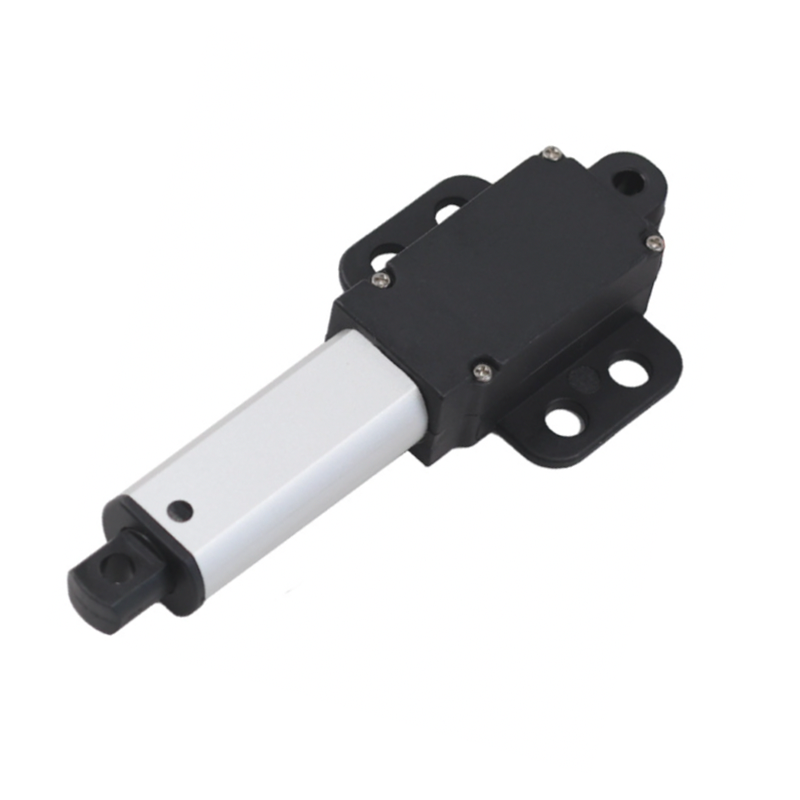
For compact mechanisms, compare the HTK15M miniature linear actuator and HTK15W compact linear actuator as reference configurations. Their product pages are starting points for discussion, not substitutes for an application review.
Information to prepare before requesting a quotation
- equipment description and a drawing or photo of the mechanism;
- working force, estimated peak force, and load direction;
- stroke, target speed, and retracted-length limit;
- cycle frequency, duty cycle, and expected service life;
- mounting dimensions, guidance, and possible side load;
- voltage, controller limits, feedback, and synchronization needs;
- environmental and compliance requirements;
- prototype quantity, annual volume, and target schedule.
The electric linear actuator selection guide provides more detail on load, stroke, speed, duty cycle, mounting, and environment. Preparing these inputs makes quotations easier to compare because each supplier is solving the same defined problem.
Conclusion
Choosing a custom linear actuator manufacturer is an engineering and supply-chain decision. It is not a search for the largest force number or the strongest marketing claim. Check how the supplier defines requirements, controls drawings, tests risks, manages samples, and supports production changes. For an application review, prepare the load, stroke, speed, duty cycle, installation space, mounts, controls, environment, and expected quantity. Send them through the GEMING contact page.
Frequently Asked Questions
What should an OEM check before choosing a custom linear actuator manufacturer?
Check whether the manufacturer reviews load, stroke, speed, duty cycle, mounting, environment, controls, and validation as one system. Request drawings, test evidence, sample controls, and a clear change-control process.
What information is needed for a custom linear actuator quotation?
Prepare working and peak load, stroke, target speed, available voltage, duty cycle, retracted-length limit, mounting geometry, environment, feedback needs, annual quantity, and required certifications.
Is a higher actuator force rating always safer?
No. Force must be evaluated together with speed, current, duty cycle, screw life, mounting strength, and side load. Excessive rating can add size, cost, and electrical demand without fixing the real application risk.
When is a custom actuator preferable to a catalog model?
Customization is useful when the application has a strict installation envelope, unusual stroke, special feedback, specific connectors, environmental protection, or production integration requirements that a standard model cannot meet.
Should buyers request a production sample before volume orders?
Yes. A sample or pilot batch allows the OEM to validate fit, motion, current, temperature, noise, controls, and failure behavior in the actual mechanism before releasing volume production.